Language for Life Staff

Language for Life Staff

venerdì 12 luglio 2013

Some and Any


SOME AND ANY


SOME
ANY
+
(Affirmative)
?
(Offers)
-
(Negative)
?
(Interrogative)
Alcuni
Un po’ di
Dei
Delle
Alcuni
Un po’ di
Dei
Delle
EXAMPLES:
Would you like some tea?
EXAMPLES :
Is there any milk?


What time is it? - Che Ore sono?

Purzen Clock Face clip art

12 = o'clock                 3= quarter            6= half                   9=  quarter


The left hand side of the clock
31” – 59” (minutes)
The right hand side of the clock
1” – 30” (minutes)
FORMULA:
Minutes
(missing to the new hour)
+
to
+
Hour
(new hour)
FORMULA:
Minutes
(actual minutes)
+
Past
+
Hour
(actual hour)


12:00 A.M. - 11:59 A.M. = In the morning

12:00 P.M. - 17:59 P.M. = In the afternoon

18:00 - 20:59 = In the evening

21:00 - 23:59= At night


12:00 A.M.  24:00   0:00
Midnight
12:00 P.M.
Midday / Noon

 
EXAMPLE:

HOUR
LONG FORMAT
DIRECT and Short
8:45
Quarter to nine in the morning
Eight forty-five A.M.
11:08
Eight past eleven in the morning
Eleven o eight A.M.
12:00 P.M.
Twelve o’clock in the afternoon
Noon
15:15
Quarter past three in the afternoon
Three fifteen P.M.
18:54
Six to seven in the evening
Six fifty-four P.M.
21:30
Half past nine
Nine thirty P.M.
12:00 A.M.
Twelve o’clock in the morning
Midnight
3:25
Twenty-five past three in the morning
Three twenty-five A.M.


giovedì 11 luglio 2013

First pictures from Language for Life "Live with the Teacher" - California

+

Meeting new American Friends

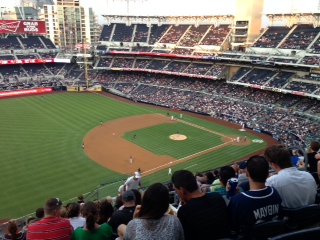
Baseball game

Sea port village San Diego

Laguna Beach High School

Laguna Beach High School - A guided tour thanks to Sarah Ray
Crescent Bay

Crescent Bay

lunedì 1 luglio 2013

Present Simple - Presente Simplice


Present Simple – Presente Simplice

 
VERBS
+
 (Affirmative /Affermativo)
-
(Negative/Negativo)
?
(Interogative/Interrogativo)
 
 
Aggiungete sempre un “not”
 
To Be
 
In English we always use the subject pronoun in front of the verb
Nell’inglese sempre se usa il pronome davanti il sostantivo
I am                   We are
Io sono                  Noi siamo
You are              You are
Tu sei                     Voi siete
He is
Egli è
She is                   They are
Ella è                        Loro sono
It is
Esso è
Subj + to be + not….
I am not
I’m not
They are not
They’re not
I am not tall
He is not tall
He’s not tall
To be + subj + ….
Am I not
Are they not
Is he not tall
 
To Have
 
Use the root of the verb (walk) and you place it in front of the subject pronoun
Usate la radice del verbo e lo mettete davanti il pronomi.
I have                   We have
Io ho                         Noi abbiamo
You have              You have
Tu hai                         Voi avete
He has
Egli ha
She has                   They have
Ella ha                         Loro hanno
It has
Esso ha
Subj + do + not + verb….
I do not have a toy
She doesn’t have a toy
Do + subj + verb + ….
Do I have a toy?
Does she have a toy?
Do they have a toy?
To Walk
These are normal ending verbs so we simply add an “s” to the third person singular
Questi sono finali normali perciò solo dovete aggiungere una “S” terza persona singulare
I walk                   We walk
You walk             You walk
He walks
She walks            They walk
It walks
        
Subj + do + not + verb….
He doesn’t walk
You don’t walk
They don’t walk
Do + subj + verb + ….
Does he walk
Do you walk
Do we walk
To Write
 
I write                   We write
You write             You write
He writes
She writes            They write
It writes
Subj + do + not + verb….
I don’t write
It doesn’t write
You don’t write
Do + subj + verb  + ….
Do I write?
Does it write?
Do you write?
To Fix
This is a verb with a special ending s,ss,ch,sh,o,z&x add es
Questo è un verbo con un finale special e quando il verbo finisce con s,ss,ch,sh,o,z&x aggiungete “es”
I fix                        We fix
You fix                  You fix
He fixes
She fixes            They fix
It fixes
Subj + do + not + verb….
You don’t fix
He doesn’t fix
We don’t fix
Do + subj + verb  + ….
Do you fix?
Does he fix?
Do we fix?
To Play
When the word ends with a “y” look at the letter in front and if it is a vowel it will have a normal ending so just add an “s”
Quando il verbo finisce con “y” guardate la lettera prima e se c’è una vocale rimane normale aggiungete una “s”.
I play                    We play
You play              You play
He plays
She plays             They play
It plays
Subj + do + not + verb….
I don’t play
It doesn’t play
They don’t play
 
Do + subj + verb  + ….
Do I play?
Does it play?
Do they play?
To Cry
When the word ends with a “y” look at the letter in front and if it is a consonant remove the “y” and add  “ies”
Quando il verbo finisce con “y” guardate la lettera prima e se c’è una consonante togliete la “y” e aggiungete “ies”.
I cry                     We cry
You cry                You cry
He cries
She cries             They cry
It cries
 
Subj + do + not + verb….
We don’t cry
He doesn’t cry
They don’t cry
Do + subj + verb  + ….
Do we cry?
Does he cry?
Do they cry?